What Is Data Quality Management? Framework, Benefits & Lifecycle
Data Quality Management (DQM) is a well-oiled machine designed to detect, understand, prevent, and fix data issues–ensuring your information is top-notch and ready to power sharp decision-making and rock-solid business governance without missing a beat.
These practices help in gaining insight into data health by using diverse processes and technologies to handle even the most complex datasets without breaking a sweat.
Effective data quality management plays a pivotal role in pulling actionable and accurate insights from the given data, ensuring you get exactly what you need.
Let’s explore data quality management and all the things related to measuring and maintaining data quality.
What is Data Quality Management?
Data quality management is a battle-tested collection of processes dedicated to keeping your data in tip-top shape, ensuring that you stay on the mark with high-quality information.
DQM covers all bases, spanning everything from initial data collection all the way to deploying cutting-edge data procedures for successful data delivery.
Effective Data Quality Management is the backbone of any reliable analysis process. It guarantees that the insights guiding your big moves are built on rock-solid, top-tier data.
Core Dimensions of High Data Quality
Data quality boils down to assessing whether the information you hold can hit the mark, measuring its overall purpose and capacity to serve your end goal without falling short.
To meet an organization’s operational, planning, and decision-making requirements, the quality of your data has to be top-notch.
High-quality data is often measured by several key characteristics.
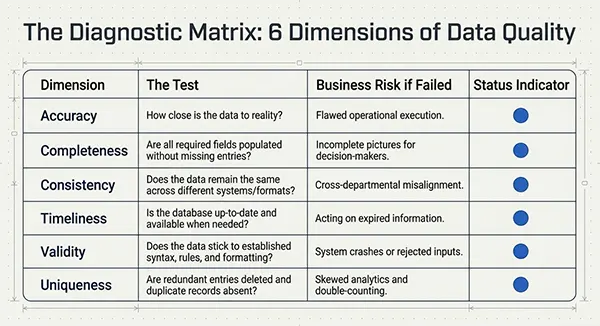
- Accuracy – It’s a measure of how close the data is to reality.
- Completeness – All the values present in the required fields are complete and have no missing entries.
- Consistency – The data remains consistent across different systems and formats.
- Timeliness – The information present in the database is up to date and available when needed.
- Validity – Data sticks to established syntax, rules, and formatting standards.
- Uniqueness – There are no duplicate records and redundant entries are deleted.
Why Is Data Quality Management Important?
Most organizations invest heavily in data quality management solutions because it pays off–giving them reliable and high-grade fuel they need to make sharp decisions and stay ahead of the curve.
It would completely derail the organization’s future decisions if stakeholders can’t trust the numbers.
Here is why DQM is important.
- Analytics and Reporting – If the data quality is compromised, your dashboard won’t be able to help you make perfect choices. Keeping your data pristine is the name of the game if you want to generate trustworthy analytics and reporting.
- Operational and Financial Risk – With quality data, you can easily forecast finances and reduce operational and financial risk.
- Improved Customer Experience – We know that customer support runs on data. So, accurate and timely data will help immensely in improving customer experience.
- Regulatory Compliance Support – Regulations like GDPR and CCPA impose strict requirements for data accuracy. So, DQM becomes especially important.
Key Components of Data Quality Management Framework
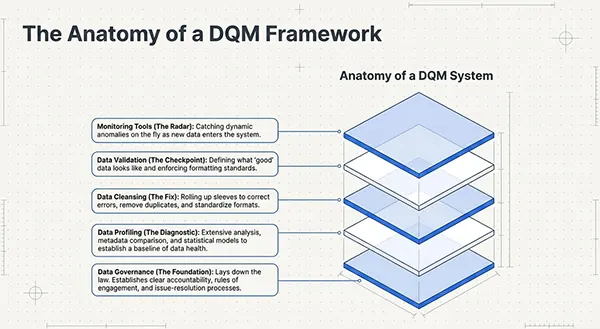
A robust data quality management model or framework is the real deal for ensuring that the data is accurate and reliable throughout its lifecycle.
The core components of this framework ensure that there are no data quality issues and that it aligns with your business goals.
Data Profiling
Data profiling is an important step in the DQM lifecycle, and it involves steps such as:
- Extensive data analysis
- Implementing statistical models
- Data quality report
- Compare data with metadata
Overall, it gives you a baseline understanding of data health.
Data Cleansing
You identify problems after data profiling; now it’s time to roll up your sleeves and clear them. This component of data quality management corrects or removes errors, duplicates, and inconsistencies. This can also involve standardization.
Data Validation Rules
This takes care of data quality and defines what good data looks like. For example, it might specify that a certain field cannot be null or a number must fall within a range. These validation rules can flag bad data for review or shut the door on it before it enters the system.
Data Governance Frameworks
Data governance is where you lay down the law and establish who calls the shots for data quality. It sets the rules of engagement, standards, and the process of resolving issues. Basically, clear accountability is established to maintain quality over time.
Data Quality Monitoring Tools
As new data is added to the database, the overall quality can easily go downhill if left unchecked. That is why you need to keep an eye on its status through data quality monitoring tools. These give you the power to catch dynamic anomalies on the fly and alert you when an issue arises.
Data Quality Management Lifecycle
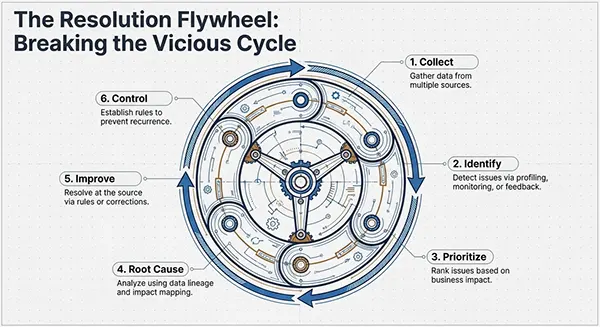
When you are looking to improve data quality, you try to put a structure in place for effective data cleansing and management. The structured approach allows organizations to break the vicious cycle of random issues.
While these steps aren’t written in stone, they will do the heavy lifting for pretty much any organization.
- Data Collection – The first step of the lifecycle is the process of gathering data from multiple sources.
- Identify Issues – Detect issues with the gathered data through profiling, business feedback, or monitoring.
- Prioritize – Now, you must rank these issues based on business impact, downstream dependencies, and more.
- Look for Root Cause – Now, it’s time to analyze the root cause using data lineage and impact analysis.
- Improve – Once you find all the issues, resolve them at source using process improvements, validation rules, master data management, or data corrections.
- Control – The last step is to establish well-defined monitoring rules that prevent the same issues from recurring.
Also Read: What Is Data Mining? Definition, Process, Techniques, Examples & Benefits
Benefits of Data Quality Management
If you invest in DQM, it delivers tangible data-backed benefits that directly boost your bottom line.
- Data-Driven Decision Making – When effective DQM practices are in place, you can make business decisions with complete confidence based on trustworthy data.
- Enhanced Productivity – DQM ensures that businesses handle data quality issues in an automated manner. It certainly enhances productivity.
- Competitive Advantage – If your business produces good data, it will gain a good reputation. We all know that a good reputation can gain a competitive advantage over others.
- Improvement in Financial Health – We’ve seen how poor data quality can take a heavy toll on the financial health of the organization. Implementing DQM ensures that you don’t bleed money through costly operational blunders.
- Enhanced Scalability and Efficiency – Manual data cleanup can reduce productivity, as data scientists will be spending their time on data preparation. The best DQM software takes the heavy lifting off their shoulders, slashing preparation time so your team can hit their stride, boost scalability, and efficiency.
Best Practices for Effective Data Quality Management
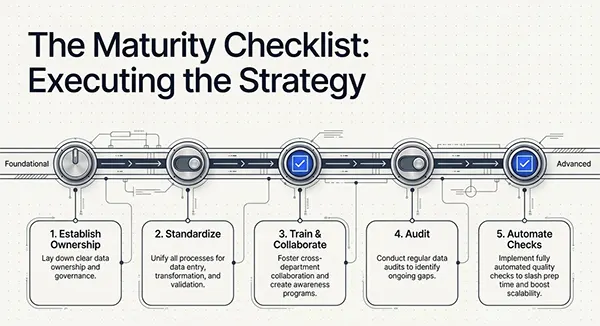
For effective data quality management, your organization needs a strategy that can shape the entire landscape. Here are some best practices to ensure your framework delivers the goods.
- Establish clear data ownership
- Implement automated quality checks
- Conduct regular data audits to identify gaps
- Must standardize all data processes for data entry, transformation, and validation.
- Foster cross-department collaboration
- Create training and awareness programs for employees
Also Read: What Is a Modern Data Stack? Components, Benefits & Best Tools
Conclusion
Maintaining high-quality data through effective data quality management is the secret sauce for organizations looking to stay ahead of the curve, make rock-solid decisions, and keep operations running like clockwork. Practices like profiling, cleansing, standardization, validation, and automated monitoring allow you to nip bad data in the bud and clear out inaccuracies before they can disrupt your core business processes.
Ultimately, investing in DQM practices not only enhances data reliability but also supports better business processes and stakeholder trust.
Read More: Data Collection Methods: Types, Key Steps, & Best Practices
FAQs
What is data quality management?
Data Quality Management (DQM) is a well-oiled machine designed to detect, understand, prevent, and fix data issues.
Why is data quality management important?
Data quality management is important because it offers many benefits, such as ensuring the information is accurate, fit for business decisions, and operational efficiency.
How can poor data quality affect my business?
If the data quality is poor, it can lead to missed opportunities, compliance issues, and wrong decisions.
How can a data quality framework help with compliance?
Good DQM tools ensure that your data is accurate, up to date, and complete. So, it helps in keeping up with regulations like GDPR or HIPAA.
Sources: