Data Collection Methods: Types, Key Steps, & Best Practices
Data is a commodity coveted by every business, especially those serving a wider customer base. Most business decisions rely on that data.
However, the quality of the collected data depends on how it was collected and what process was used. If you are not following due process in data collection, it might result in inconsistencies or gaps.
Data collection is the most fundamental step for a business in research, statistics, and data-driven decision-making.
Transparent data collection methods help companies get accurate, consistent, and suitable data.
This article will focus mainly on the data collection methods, techniques, & best examples.
What is Data Collection?
Data collection is the systematic and purposeful process of gathering and recording information or data from various sources for analysis, interpretation, comparison, and decision-making.
Think of it as an important step in research and business operations. It is virtually important in every field where data is used to understand, improve, and make informed decisions.
The basic purpose of data collection is:
- To support better decision-making
- Identify trends and patterns
- Measure performance and progress
What are Data Collection Methods?
Data collection methods are procedures used for accumulating important information for research purposes. These methods could be anything: surveys, questionnaires, interviews, and more.
When a company uses this methodology to collect data, they place importance on it. Because it is analyzed to support or refute research hypotheses and draw conclusions based on the analysis.
Also Read: What Is an Enterprise Data Warehouse (EDW)?
Types of Data Collection Methods
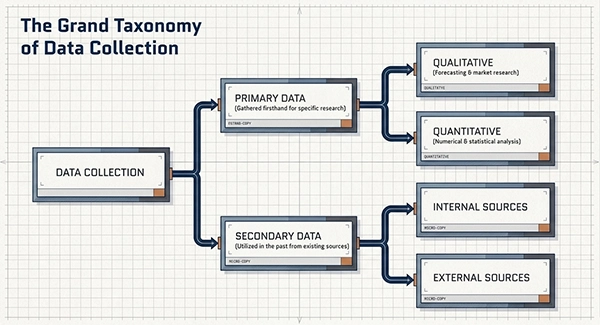
Now, let’s discuss the best or most popular data collection methods. These are categorized into two distinct categories: Primary and Secondary.
We’ll explore both in detail in this section.
1. Primary Data Collection Methods
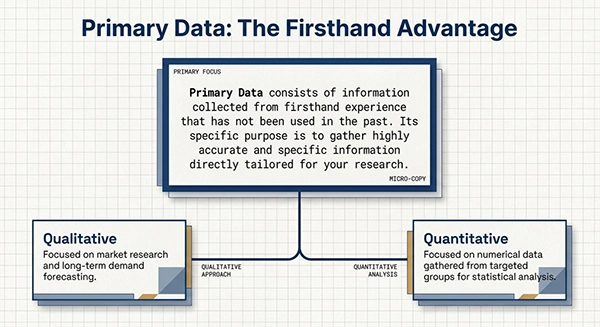
Data collected from firsthand experience and not used in the past falls under primary data-gathering techniques. The specific purpose of these methods of data collection is to gather highly accurate and specific information for research.
The primary data-gathering technique is further divided into two categories: Quantitative and Qualitative.
1. Qualitative Techniques
Qualitative techniques are often used for market research and demand forecasting. These data collection techniques are generally used for long-term forecasts.
- Time Series Analysis: This methodology to collect data includes time as a variable because the data is collected for research at equal time intervals. With this, the organization can discern patterns and trends for its products over a period of time.
- Smoothing Techniques: When it is impossible to find a pattern or trend in the data, this method of data collection is used. The smoothing technique aims to eliminate random variation from the statistical data that can achieve the right consistency within a data set.
- Barometric Method: This method is also known as the Leading Indicators Approach. That is because past events are used as leading indicators to predict the future. In simple terms, this technique aims to predict future events based on current trends.
Quantitative Techniques
These primary data collection techniques collect data in numerical form through a specific set of people.
This data collection methodology helps you understand the given data set through statistical analysis.
- Surveys: To collect good-quality data from a targeted group, surveys can be a top choice. These can gain insights into consumers’ preferences, choices, opinions, and feedback related to products and services. You can do these surveys online, through a telephonic medium, face-to-face, or on paper.
- Polls: Polls consist of one or more multiple-choice questions. This data-gathering technique is used when a business needs to gauge the quick pulse of the targeted audience. Since they are short, people don’t hesitate before taking them.
- Interviews: This method of data collection involves two people who face off each other in a formal interview format where the interviewer asks a series of questions. This helps businesses jot down the responses of respondents. If a face-to-face meeting is not possible, you can also do it over the telephone.
- Delphi Technique: This is slightly different from others. Here, a group of experts is provided with estimates and assumptions. The experts then give their answers based on those assumptions. This technique is often used when a business requires an understanding of a group opinion.
- Focus Groups: Focus groups consist of a group of people who have something in common. They discuss the given topic and present their viewpoints or opinions. This data is collected to reach a conclusion on the topic.
- Questionnaire: A questionnaire involves a set of written open-ended or closed-ended questions. These questions are given to people, and they must answer them to the best of their ability based on their knowledge and experience.
2. Secondary Data Collection Methods
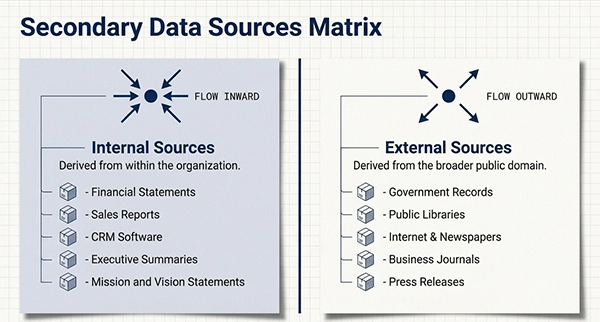
The secondary data collection methods involve data that has been used in the past.
So, the researchers in your company can get hold of this data from different data sources. These sources may include both external and internal sources.
Here is the list of internal sources of secondary data for an organization.
- Financial Statements
- Sales Reports
- CRM Software
- Executive Summaries
- Mission and vision statements
Now, let’s look at the external sources of secondary data.
- Government Records
- Public Libraries
- Internet
- Newspapers
- Business Journals
- Press Release
Also Read: What Is Data Mining?
Key Steps In the Data Collection Process
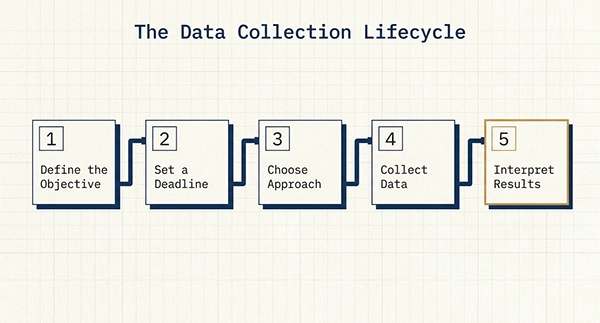
Whenever you or your company tries to gather data from various sources, you must follow certain steps.
Here is a closer look at the steps.
- Define the Objective: First, you need to define the objective of the data collection process – what you are trying to achieve with this. It also involves identifying the data sources and how much information is needed.
- Set a Deadline: Once you’ve settled the initial proceedings, the important part remains setting the deadline. Depending on the nature of the data, try to choose a specific time period.
- Data Collection Approach: Now, you must choose the methods or approaches needed to collect the required data. To choose the right data collection method, you may need to consider factors such as the type of information you need to get.
- Collect the Data: Once everything is in place, you can begin collecting data. Store and organize that data through a data management system.
- Interpret Results and Apply: Once you’ve gathered everything, conclude your analysis by interpreting the results. This is an important step, as it helps us turn raw data into meaningful insights.
Best Practices for Data Collection Methods
If you wish to collect accurate and reliable data, then you need to adhere to certain practices.
Have a look.
- Set clear goals before starting the collection process.
- Pick the right method for collection.
- If you are picking surveys or forms, first test them on a small batch.
- Must train everyone who is helping you collect the data.
- Check collected data often to catch mistakes early.
- Use safe cloud storage for saving your files.
- Always follow the local data laws of your region.
Also Read: What is a Star Schema?
Conclusion
A structured data collection plan is the support system of successful research. When you define clear objectives and select the right data collection methods, you are bound to get accurate and relevant data.
In this AI-driven era, standardization and ethical practices safeguard reliability. So, if you plan well, you will get credible insights and stronger conclusions.
FAQs
What are the most common data collection methods?
The most common data collection methods are: surveys, interviews, focus groups, and polls.
What is the importance of data collection for businesses?
It helps businesses make smart decisions based on the facts instead of just winging it without any reference.
Is it possible to combine more than one data collection method?
Yes, if you combine more than one data collection method, it will provide you with a more comprehensive understanding of that particular research.
Sources:
Data Collection Methods and Tools for Research – ResearchGate