Master Data Management (MDM): What It Is, Why It Matters & How to Implement It (2026 Guide)
Let’s say a customer changes his address with your sales team, but your billing system still has the old address. You have one phone number in your CRM, another in your support system, and another in your e-commerce system, and you have a duplicate customer profile. Everyone is working for the same customer, but they don’t have the same data.
Using master data management (MDM) is a solution to this type of problem.
Master data management is an organized way to develop, maintain, control, and share the information related to the business entities of an organization that are most essential to the business. It enables businesses to develop trustworthy records of customers, products, suppliers, locations, and other critical entities. In this guide, we will outline what is master data management and more.
- What is Master Data Management?
- What is Master Data?
- A Real-World Example of MDM in Action
- MDM vs Data Governance vs Data Quality vs Data Management
- What Is Master Data Governance?
- Why Do Businesses Need MDM?
- MDM Implementation Styles
- How to Implement MDM: Step-by-Step
- Master Data Management Tools & Software Compared
- How to choose an MDM tool?
- What is Master Data in SAP?
- MDM Best Practices
- Common MDM Challenges & How to Solve Them
- MDM for Indian Businesses
- Real Example of MDM
- Conclusion
- FAQs
What is Master Data Management?
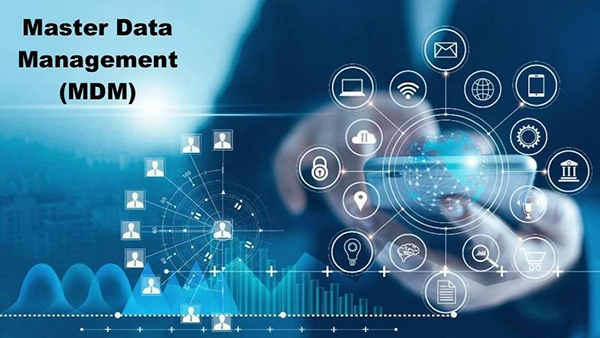
Master data management is the process of ensuring that an organization’s most critical business-related data remains accurate, consistent, and accessible throughout multiple systems.
MDM ensures that all departments are using the same version of the information about a customer, product, or supplier when they refer to the same entity.
The golden record is an important concept in MDM. This is a reliable, single data source of an entity built by aggregating information from several data sources. For example, three customer records with slightly different names, addresses, and phone numbers can be linked and merged into a reliable customer record.
It integrates technology with business processes, data standards integration, data stewardship, and more to minimize duplication and fragmentation.
MDM as a Discipline vs MDM as a Technology
MDM as a discipline is the process of determining what master data is important, who is responsible for it, how it gets managed, and what rules it must adhere to, at the business level.
| Type of Data | Its Meaning | Best Examples |
| Master data | It tells about the core business entities. | Customer data, product names |
| Transactional data | It tells about the business events. | Payment invoices |
| Reference data | It gives the values that are used to classify data. | Currency and country codes |
| Metadata | It gives information about the data. | Data lineage |
MDM as a technology is the software that enables organizations to integrate, cleanse, match, consolidate, govern, and distribute master data across systems. These tools can also be used to help in auditing, hierarchy management, and data version control.
What is Master Data?
Master data is the relatively stable data that identifies the business’s foundation and the identities it deals with on a day-to-day basis. Unlike transactional data, such as a sale or an invoice, master data describes who or what is involved in the transaction.
Some common master data domains include:
- Customer name, address, phone numbers, email addresses, and more.
- Products with proper names, SKUs, and specifications.
- Supplier information and contact details.
- Locations, such as stores, warehouses, and regions.
- Employee and organization information.
The basic idea is the same; the domains will differ by organization, but important entities that are used repeatedly in business processes will be master data.
A Real-World Example of MDM in Action
For example, a company has three smaller companies. The first company’s customer is “Ramil Anston,” the second is “R. Anston,” and the third is “Ramil J. Anston.” They also have different formatting in addresses.
Without MDM, they could be treated as three separate customers, causing confusion and duplicate marketing messages, inaccurate customer reporting, and problems with gaining a clear picture of the customer. The MDM process can match the records, determine that they are for the same entity, facilitate the removal of any conflict, and arrive at a trusted customer record.
It’s not just a cleaner database that results. A single view of the customer can be used for different applications.
MDM vs Data Governance vs Data Quality vs Data Management
Both of these terms are related but have different meanings and show different aspects of data.
| Concept | Core Focus | Best Example |
| Data management | It refers to managing complete data throughout the lifecycle. | Storing and protecting data |
| Data quality | It is all about data quality management, like accuracy, consistency, and correcting errors. | Finding and removing duplicate customer identities |
| Data governance | It refers to the policies, responsibilities, and regulations. | Assigning proper responsibilities for changing customer data. |
| MDM | It is about creating a complete record of key business entities. | Curating a reliable record of customers. |
What Is Master Data Governance?
Master data governance is the part of data governance that applies to key master data domains such as customers, products, suppliers, and locations.
A company may designate a customer data manager who manages the customer records or a product data manager who takes care of the product data.
Typical responsibilities include:
- Defining data standards
- Assigning ownership
- Establishing approval workflows
- Monitoring data quality
- Effectively handling changes to key records
General data governance can cover the organization’s broader data landscape. Master data governance is about clear owners, rules, and trusted records of critical business entities.
Why Do Businesses Need MDM?
MDM becomes essential for the business when valuable data resides in various systems and data inconsistencies start to impact business operations.
A comprehensive master data strategy is absent, and companies risk duplicate records, inaccurate reporting, substandard customer experiences, and data reconciliation nightmares.
Key benefits are:
- 360-Degree Info: Bring customer information together for a complete view.
- Improve Reporting: Minimize the number of different representations of the same business entity.
- M&A Integration: Ensure there are no duplicate and incompatible records after an M&A.
- Operational Efficiency: Minimize manual data corrections and reconciliations.
- Regulatory Readiness: Keep more up-to-date information that can be used to support compliance processes.
- More Personalization: Long-term customer data enables segmentation and personalized experiences.
MDM Implementation Styles
MDM can be implemented in many different ways. The right way to do it is based on current systems, data maturity, business needs, and the level of control desired.
| Implementation Style | It’s Working | Best For |
| Registry | It helps to create indexes that link the records across the whole system. | Large organizations that need a unified view without juggling through multiple data sources. |
| Consolidation | It helps to collect and clean irrelevant data into a central system. | Companies that need reporting and analysis. |
| Coexistence | The central MDM can work alongside existing systems. | Businesses with multiple departments sharing control over applications |
| Centralized | MDM can become the biggest source for all master data. | Organizations that need a strong central control system. |
It’s better to start with a small domain than attempting to gather all sorts of data in one place.
How to Implement MDM: Step-by-Step
There are six general steps that may be followed in the implementation of a practical MDM:
Step 1: Determine the priority domain: Use the master data that is the root cause of the largest business problem. Example: customer or product data.
Step 2: Evaluate current resources: Locate where data exists, where it is organized, and where redundancies or inconsistencies exist.
Step 3: Select implementation style: Determine which of the implementation styles is best for the business, whether it’s registry, consolidation, coexistence, or centralized MDM.
Step 4: Choose the appropriate tool: Assess integration, matching, cleansing, governance, hierarchy, and deployment needs.
Step 5: Assign ownership: Give out work to assigned managers and set rules for creating and changing data.
Step 6: Monitor and maintain data: MDM is not a clean-up operation. Continue to track quality, matching, changes, and new sources of data.
Master Data Management Tools & Software Compared
MDM software can be used to automate integration, cleansing, matching, standardization, reconciliation, enrichment, governance, and hierarchy management.
| MDM Platform | Best Suited For | Deployment | Strengths |
| Informatica | Large organizations with complex workflows | It is cloud and hybrid. | It can manage broad data. |
| SAP Master Data Governance | SAP-integrated organizations | It is cloud, on-premises, and hybrid. | It can do deep SAP integration. |
| IBM InfoSphere | Companies with large data files | It has hybrid and cloud options. | It can do complete enterprise data management. |
| Microsoft Purview | Microsoft-centric workplaces | It has hybrid and cloud options. | It helps with full Microsoft integration. |
| Semarchy | Flexible initiatives for business systems | It is cloud and hybrid. | It can help with a model-driven approach. |
| Reltio | Cloud-first companies | Cloud | It gives real-time connected business entities. |
| Stibo Systems | Product names and customer files | Cloud and on-premises options. | It helps with multiple-domain MDM and product info. |
Check Out: 10 Best Cloud Data Warehouse Solutions in 2026: Platforms and Features
How to choose an MDM tool?
Before choosing an MDM tool, here are things you should look for to make it work well in your business:
- Number and type of data domains.
- Current ERP and CRM solutions.
- Cloud, on-premises, or hybrid needs.
- Integration capabilities.
- The matching and deduplication requirements are enforced.
- Governance and workflow features.
- You must consider how much the solution is likely to grow and the difficulty of implementing it at scale.
Not all the largest and most popular software and platforms are a perfect match. The tools should be commensurate with the data landscape and objectives of the organization’s implementation.
What is Master Data in SAP?
Master data in SAP environments is the core data that is utilized in multiple business processes, like customer data, supplier data, material data, or organizational data.
SAP Master Data Governance (SAP MDG) is SAP’s solution to govern and maintain master data. It can be used to standardize and control master data processes in an SAP environment.
A manufacturing company might employ material master data to provide information on materials and products, and customer and supplier master data to supply data for sales and procurement.
SAP MDG could be beneficial for enterprises that are deeply involved in SAP due to its integration capabilities with the larger SAP community. A more all-encompassing multi-system MDM approach might better suit organizations that span several platforms.
MDM Best Practices
Successful MDM is a combination of business ownership and technology.
- Do not try to tackle the enterprise-wide cleanup right away.
- Delegate clear ownership, with somebody being responsible for each master-data domain.
- Create business rules and automate the workflows.
- Seek opportunities to automate matching and merging correctly.
- Tie MDM into governance policy and not as an independent IT initiative.
- Keep an eye on data quality at all times, since data is changing over time.
- Plan for integration early to get trusted master data to systems that need it.
- Track business metrics, like reduced duplications, quicker onboarding, or better reporting.
Common MDM Challenges & How to Solve Them
MDM projects can be complex when the systems are owned by numerous organizations, formats vary, or ownership is unclear. Let’s check out the common mistakes and how to solve them here:
IBM also points out that a single version of truth, data quality, reconciliation, transformation, and normalization versus usability are among the biggest problems with MDM.
MDM for Indian Businesses
Talking about the Indian business landscape, MDM can be extremely relevant for businesses having many customers, multiple locations, complicated supplier chains, or regulated processes.
The enhanced customer master data can also help in the processes of India’s Digital Personal Data Protection Act, specifically in the identification and management of personal data with consistency. But MDM programs are not enough to ensure compliance; it’s also critical to have the right policies, consent processes, security controls, retention policies, and more.
MDM has applications in virtually:
- Customer identity and KYC-related data.
- Material, supplier, product, and plant information.
- Customer, product, store, and supplier records.
- Patient and provider information.
Real Example of MDM
An Indian retail business has an online store, mobile app, brick-and-mortar stores, and customer service center.
Customer data can be stored in a unique way within each system. One could have a full telephone number, another an old address, and another a duplicate customer profile.
These records can be consolidated, matched, cleaned up with rules, and shared onto systems that have a trusted customer record within an MDM initiative.
Business benefits may include reduced duplication of profiles, improved customer consistency, and better customer analytics.
This is where special data consulting can also be helpful: organizations might require help choosing the right MDM platform, deciding how to evaluate their current data, structuring the governance processes, and integrating the solution into the business systems.
Read Next: What Is an Enterprise Data Warehouse (EDW)? Definition, Architecture, & Benefits
Conclusion
Companies can struggle keeping tons of data if they are not organized properly. With master data management, businesses can create one master source for all the information related to customers and sales. This helps to reduce mistakes and duplicity and keep the data up to date.
We have explained all about master data management tools and uses in this blog and hope the information guides you further!
FAQs
What is MDM?
Master data management is organized and trusted information regarding important business entities like customers, products, and suppliers.
What is master data management?
Master data management is about processes, governance, data quality, and technology designed to develop and keep accurate master records across business systems.
What is master data governance?
Master data governance establishes standards, ownership, rules, and accountability for critical master data domains as well as workflows.
What is master data in SAP?
Master data in SAP consists of essential business data like customer, supplier, material, and organizational data that are reused in various business processes.
What is the difference between master data management and data governance?
Data governance sets the bigger-picture policies, ownership, standards, and accountability for data, whereas MDM is for trusted records of core business entities.
What are the best master data management tools?
The most popular enterprise MDM platforms are Informatica MDM, SAP MDG, IBM Solutions, Reltio, Semarchy, Stibo Systems, Microsoft Purview, and Profisee.
What are examples of master data?
Examples include customer, product, supplier, location, employee, and material data. They are fairly persistent and can be reused for several business processes.
Is MDM the same as a CRM or ERP system?
No. CRM and ERP systems can perform specific functions, and MDM can handle and control shared master data that might require consistent use across several systems.