
What is a Columnar Database? When Should You Use or Avoid a Columnar Database?
A columnar database is used to physically record all data in columns instead of rows. You can use it to store large datasets with less read time. It helps you make quicker decisions rather than waiting for reports.
Here, you can discover what is columnar database, its benefits, the difference between other databases, and other information.
So, stay tuned!
Quick Answer:
A columnar database is a storage system that records all values in columns instead of rows. It is suitable for analytical queries and storing millions of information.
- What is a Columnar Database?
- What are the Benefits of Using a Columnar Database?
- Columnar Vs Row Database: What’s the Difference?
- Difference Between Columnar and Relational Database
- When Should You Use a Columnar Database?
- When Should You Avoid a Columnar Database?
- What are Examples of a Columnar Database in 2026?
- Wrapping Up!
- Frequently Asked Questions
What is a Columnar Database?
A columnar database is also known as a column-oriented database. It is a type of database management system that stores data in columns on disk instead of rows.

This enables faster queries and reduces I/O time in transferring data from the physical disk. That is why a columnar DB performs better for operations and large datasets.
For example, columnar storage is the best choice for data analytics and data warehousing. Because it requires a large amount of historical information to be stored in one central system.
Did You Know?
I/O (Input/Output) is the process of reading data from physical storage.
What are the Benefits of Using a Columnar Database?
A columnar database can handle large datasets, has better compression, takes less disk space, and improves efficiency and speed.
Here are the benefits of using a columnar DB in great detail.
Handle Large Datasets
A columnar database is best for handling large datasets. When the application has column-based information, it reduces I/O and improves filtering.
Better Compression
If the data contains fewer rows, similar values are stored together. It has a highly compressible nature and has different options like (AVG), (MIN, MAX).
Efficiency and Speed
Scanning analytical queries is much faster in a column DB than in a row database. It performs efficiently in storing data from a physical disk.
Takes Less Disk Space
Another benefit of this database is self-indexing. It uses less disk space than a relational database management system while storing the same amount of information.
Also Read: What is a Star Schema? Definition, Components, Benefits & Star vs Snowflake Schema
Columnar Vs Row Database: What’s the Difference?
In a row-based database, data is recorded in contiguous form on disk. It is easy to read one single row because all items are listed next to each other.
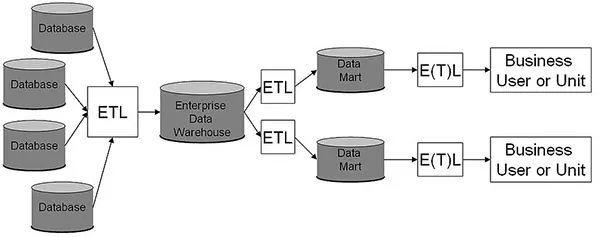
But an analytical query should read all past information of every row, which needs more time. That is why a columnar oriented database is preferred for big datasets because it reads only selected columns.
Let’s take a look at the breakdown table to know the difference between columnar and row databases.
| Comparison Feature | Columnar Database | Row Database |
| Physical Storage | All values of a single column are recorded together. | All values are written one after the other. |
| Primarily Workload | OLAP (Online Analytical Processing) combines data into a single group and performs bulk scans. | OLTP (Online Transaction Processing): single-row updates and point lookups |
| Compression | 5–10× typical, up to 30× | 1.5–3× typical |
| I/O Status | Read only selected columns. | Read all columns. |
| Write Performance | Highly preferable for large batch operations. | Efficient for single row inserts and updates. |
| Concurrency | 10s – 100s of analytical queries per node. | 1000s of point queries per node. |
| Examples | ClickHouse, Snowflake, BigQuery, Amazon Redshift | Postgres, MySQL, Oracle |
Difference Between Columnar and Relational Database
Columnar and relational databases are two different models. A relational database includes tables with rows and columns, primary keys, and rules. Most traditional databases use row-based storage. That is why people think relational and row-based models are the same. But they’re different!
Meanwhile, a columnar DB refers to how data is physically stored. It focuses on storing all values in a single column. This means that columnar represents aggregations, and relational databases present transactions in every single field.
When Should You Use a Columnar Database?
You can use a columnar database when you store millions of data points or real-time analytics logically. It is generally used to record data into columns instead of rows.
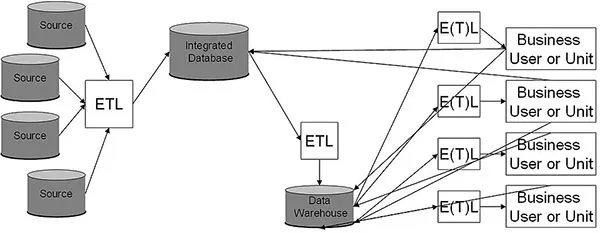
For example, the sales table with millions of entries has four columns: Transaction_ID, Store_ID, Date, and Amount.
| Transaction_ID | Store_ID | Date | Amount |
| 1001 | West | 01-08-2026 | $50 |
| 1002 | East | 01-08-2026 | $20 |
| 1003 | West | 02-08-2026 | $100 |
Let’s look at how data is stored in a row and column based database to know the difference.
1. Row-Based Database
Dist Layout: 1001, West, 01-08-2026, 50; 1002, East, 01-08-2026, 20; 1003, West, 02-08-2026, 100
2. Columnar-Based Database
Disk Layout:
- Transaction_ID: 1001, 1002, 1003
- Store_ID: West, East, West
- Date: 01-08-2026, 01-08-2026, 02-08-2026
- Amount: 50, 20, 100
These two entries highlight that:
- The row-based system must read all data from start to finish. This takes a lot of I/O time.
- In a columnar DB, if you want only “Amount” data, it only reads the selected data. This reduces the I/O time.
- The columnar based database is suitable for handling large datasets and millions of transactions.
Also Read: What Is an Enterprise Data Warehouse (EDW)? Definition, Architecture, & Benefits
When Should You Avoid a Columnar Database?
You should avoid a columnar database when you don’t need complex analytics and column based information.
Here are two conditions where you should avoid the columnar DB.
1. Small Datasets
If you’re analyzing small datasets or information, a row-based database might work more efficiently. It is a well-indexed system that centers on rows with multiple tables.
2. Transactions
In a banking system, a transaction needs both debit and credit sides at the same time. This situation prefers a row-based database that reads all values from start to end. It means that if you need strong transactional entries, a row RDBMS is more suitable than a columnar one.
What are Examples of a Columnar Database in 2026?
The popular examples of a columnar database in 2026 are the following:
- Amazon Redshift
- ClickHouse
- DuckDB
- Snowflake
- Google BigQuery
- Apache Druid
- Apache Pinot
- Tinybird
- StarRocks
Each of these database services may differ from the others. So, you have to research before selecting the correct one for your business.
Wrapping Up!
Now, you know that a columnar database is beneficial for recording large datasets. It can also reduce I/O time and compress the data, which takes less storage on a disk.
This database is suitable for analytical queries and when you need only selected information. It records all values in a column format instead of rows. In case you need expert advice, you can go for data handling services. Their expertise can ease your workload and store your information efficiently.
Frequently Asked Questions
What is a columnar database?
A columnar database records all information in column format rather than rows on disk. It is suitable for storing millions of data points or large datasets.
Is a columnar database SQL or NoSQL?
A columnar database is a NoSQL database. It stores data in a wide column format, key-value stores, and document databases.
What are examples of a columnar DB?
The examples of a columnar DB are the following:
- Amazon Redshift
- ClickHouse
- DuckDB
- Snowflake
- Google BigQuery
When should I use a columnar database?
When you want to group all values in columns and perform analytical queries, you need a columnar database.