


Data catalog platforms help teams search, understand, and trust their data by creating an inventory of each dataset. They bring information about different data sources into one searchable place. Some top data catalogs in 2026 are Atlan, Collibra, Alation, Microsoft Purview, and AWS Glue.
In this guide, you will learn about a data catalog, the best data catalog tools, their features, and how to choose the right one for you.
Quick Answer:
What are the best data catalog platforms?
The best data catalog platforms in 2026 include Atlan, Collibra, Microsoft Purview, Alation, Google Cloud Dataplex, AWS Glue Data Catalog, Informatica, and OpenMetadata. These tools help companies organize their data, understand where it comes from, manage who can access it, and easily find their data in one place.
What is a Data Catalog?
A data catalog is an important component where a company keeps information about all its data resources, including tables, dashboards, reports, and data pipelines. This platform contains metadata that enables users to discover data, understand the meaning behind it, and verify ownership and access reliability.
You may compare a Data Catalog to a library card catalog for company data. Instead of finding books, employees can use it to find data stored in different cloud data warehouses like Snowflake, BigQuery, and Databricks.
Key Features of Data Catalog Tools
The best data catalog has features that help people easily find, understand, and manage data. Before choosing a tool, make sure it includes these important features:
- Metadata management: Collects and organizes information about data from different databases and tools automatically.
- Search and discovery: Helps users quickly find the data they need.
- Data Lineage: Shows where data comes from and how it moves or changes from one system to another.
- Business Glossary: Explains common business terms so everyone understands them clearly.
- Data Governance: Helps control who can access data and protects sensitive information, such as personal details.
- Collaboration: Allows team members to share comments, give feedback, and identify trusted data.
- AI-powered Automation: Uses AI to create descriptions, add tags, and help users search for data using everyday language, saving time and effort.
8 Best Data Catalog Platforms in 2026
The top data catalog platforms in 2026 are Atlan, Collibra, Microsoft Purview, Alation, Google Cloud Dataplex, Informatica, and OpenMetadata. Every tool has different features and works best for different teams and business needs. Let’s look at each one in detail.
1. Alation

Alation is a data catalog tool that helps companies find, understand, and manage their data. Users can easily search for datasets, reports, and tables across different systems. This also helps users find useful and trusted data. It supports data governance by allowing companies to define data terms, assign responsibilities, and set rules for using data.
This is a good choice for large companies where different teams share data. Furthermore, it helps both business users and technical teams make better decisions based on accurate and trustworthy details.
Best for: Better for those companies that focus on analytics and want to help analysts find and use data easily.
2. Atlan
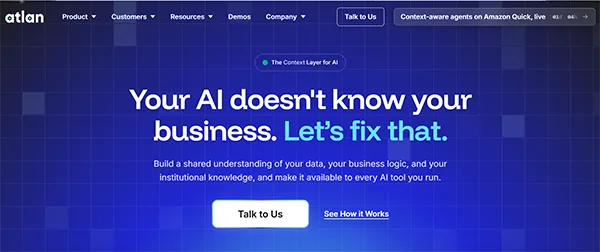
Atlan is the latest data catalog tool that helps teams easily find, understand, and manage data. It connects with tools like Snowflake, Databricks, and dbt. It shows where data comes from and how it moves between different systems.
Atlan also connects data information automatically and uses AI to create descriptions. This helps data analysts and businesses work together and find the right data quickly without checking different tools.
Best for: It is best for modern data teams that want easy-to-use tools for finding data and working together.
3. Microsoft Purview
Microsoft Purview is a data management tool that helps companies organize, find, and protect their data. It helps teams manage data and keep track of their information. Purview works with other Microsoft tools, such as Azure, Microsoft Fabric, and Power BI.
It helps businesses in understanding which data they have, where it is stored, and the way how it is used. This is a good choice for companies that are already using Microsoft products and willing to keep their data safe and follow data rules.
Best for: Companies that are already using Microsoft and Azure tools.
4. Collibra
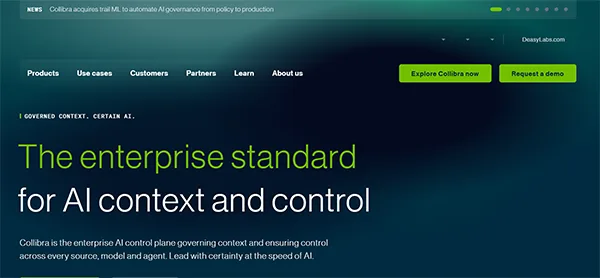
Collibra is a data management tool that helps companies organize, understand, and protect their data. It also helps companies protect private details and follow rules and regulations. This also helps to find data, track where it comes from, and know who is responsible for it.
It is useful for industries like banking, insurance, and healthcare, where data security is important. However, setting up and managing the platform can take time and may require a dedicated team.
Best for: It is ideal for large companies that need to follow strict rules and manage sensitive data.
5. AWS Glue Data Catalog
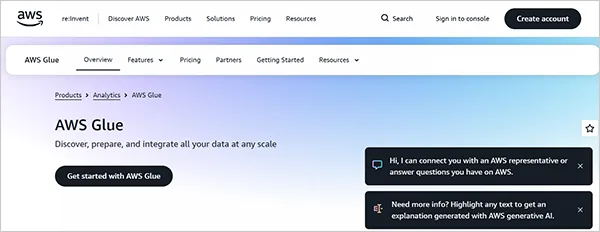
AWS Glue Data Catalog is a service that stores information about data, such as table names, file locations, and data formats. AWS Glue crawlers scan data sources and automatically identify their structure. It works with Amazon S3 and Amazon Athena to help teams access and analyze data. It is especially designed for technical data management within AWS.
Best for: engineering teams that build and manage data pipelines using AWS services.
6. Google Cloud Knowledge Catalog
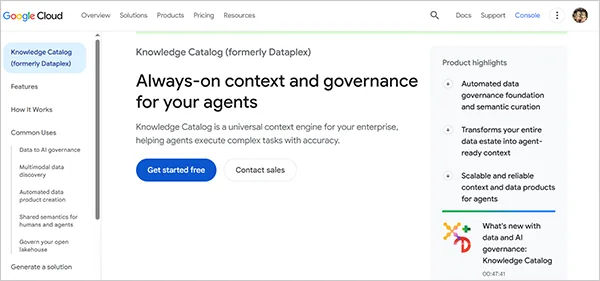
Google Cloud Knowledge Catalog facilitates the ability for businesses to find, analyze, organize, and govern data within Google Cloud platforms. The tool provides information about data as well as helps users understand connections between different datasets.
It works with services like BigQuery and Cloud Storage to make data easier for those who already use the Google Cloud Platform to store and analyze data. It also helps teams maintain data quality and follow data governance policies.
Best for: Organizations that use Google Cloud for data storage and analytics.
7. Informatica
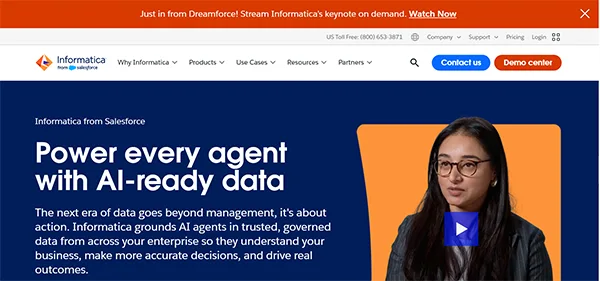
In addition to offering enterprise data management tools, Informatica has also developed an intelligent data management cloud platform. It is able to offer cataloging, which helps businesses search for information, understand their data, track its source, and govern data. Also, the tool’s CLAIRE AI engine supports automated task and metadata management.
This tool is meant for organizations that operate data in a hybrid environment of cloud, on-premises, and several business applications. However, setting up and managing the platform may require specialized technical skill.
Best for: Large enterprises managing data across multiple systems and platforms.
8. OpenMetadata
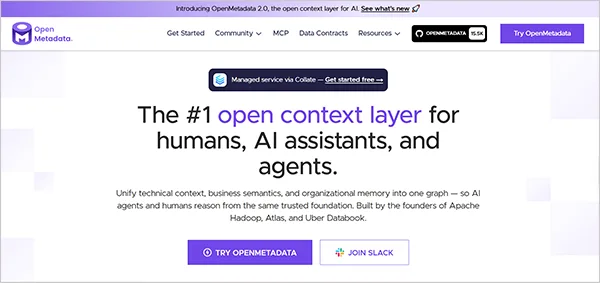
OpenMetadata is a free, open-source platform that helps teams find, organize, and manage data in one place. This platform provides data details, data lineage, checks data quality, and shows who owns and uses the data. Users can customize it according to their needs without paying license fees. However, they need technical skills to set it up, maintain it, and manage the required infrastructure.
Best for: Technical organizations that want a flexible data catalog without license costs.
How to Choose the Right Data Catalog Software
Selecting the best data catalog software starts with understanding your data infrastructure, team capabilities, and data governance requirements. You had better follow these steps to make the right decision:
- List your sources: Note down all the warehouses, databases, and BI tools your organization uses. Eliminate those that do not have critical connectors.
- Define your main use case: Identify your primary requirements—discovery, governance, lineage, or compliance because every product has a bias towards one of them.
- Check automation: Choose a catalog that scans and updates itself automatically because a manual entry-based catalog will get outdated soon.
- Run a proof of concept: Select two or three products from shortlisted tools and test them using real organizational data. Involve actual users and evaluate each tool against the same scoring criteria.
- Verify pricing and total cost: Data catalog agreements range from approximately $20,000 to $500,000 per annum. Hence, verify the additional expenses, including implementation, training, and maintenance.
- Confirm Metadata Portability: Ensure that the metadata that you have curated is portable in case you change platforms.
Dos and Don’ts of Data Catalog Platforms
If you want to get real benefits from your data cataloging solution and to avoid the mistakes made during rollouts, keep these dos and don’ts in mind:
Dos
- Start with a single valuable domain, validate, and then scale to others.
- Appoint data owners and stewards for all vital datasets, who can keep the information accurate.
- Use scheduled scans connecting data pipelines to keep catalog information up to date.
- Educate business users rather than only engineers since adoption is the key to success.
Don’ts
- Don’t depend only on manual documentation since it quickly goes outdated within several months.
- Don’t purchase any solution until you conduct a proof of concept using your own data.
- Never ignore problems with the integrations with your BI solution, warehouse, or pipeline stack.
- Don’t overlook data governance practices such as access control and PII identification.
Conclusion
Data catalog platforms in 2026 have become vital due to the spread of data in many clouds and AI technologies. A good catalog platform helps you locate the relevant data instantly rather than wasting time.
Choose Atlan or Alation for collaboration. If you need governance, get Collibra. Purview, Glue, or Dataplex are better if you exist in only one cloud. Select OpenMetadata if you prefer an open-source solution.
FAQs
What is a data catalog used for?
A data catalog helps teams discover, interpret, and manage data in an organization. It shows where data comes from, how it connects, and if it can be trusted.
What is the difference between a data catalog and a data warehouse?
The data warehouse stores the real data itself, whereas the data catalog holds metadata about the actual data. Data catalogs provide information about what exists, where it exists, who owns it, and whether you can trust it or not.
Which is the best data catalog platform in 2026?
Atlan and Alation are the best for new-generation teams; Atlan has been ranked as a leader in the latest Gartner and Forrester reports. Collibra will be more useful for large, regulated organizations, while OpenMetadata would be the best open-source option for data cataloging.
Are there free or open-source data catalog tools?
Yes, OpenMetadata, DataHub, and Amundsen are free, open-source catalogs without any licensing fees. They provide functionality for discovering, tracking data lineage, and ensuring data quality. However, you need to host, manage, and maintain them yourself.
How much do enterprise data catalog platforms cost?
The cost of an enterprise data catalog is usually between $20,000 and $500,000 annually, depending on users, connectors, and the size of the deployment. Commercial providers use a quote, which is customized for each product. Therefore, you should ask for a personalized quotation.
Do data catalog platforms use AI?
Of course, most of the top data catalog platforms use AI to describe data, identify sensitive information, track data lineage, and answer questions in natural language. This saves time and reduces manual work.
Sources:
- Best Data Catalog Platforms in 2026 by Puppygraph
- 17 Best Data Catalog Tools in 2026: A Complete Buyer’s Guide by Atlan